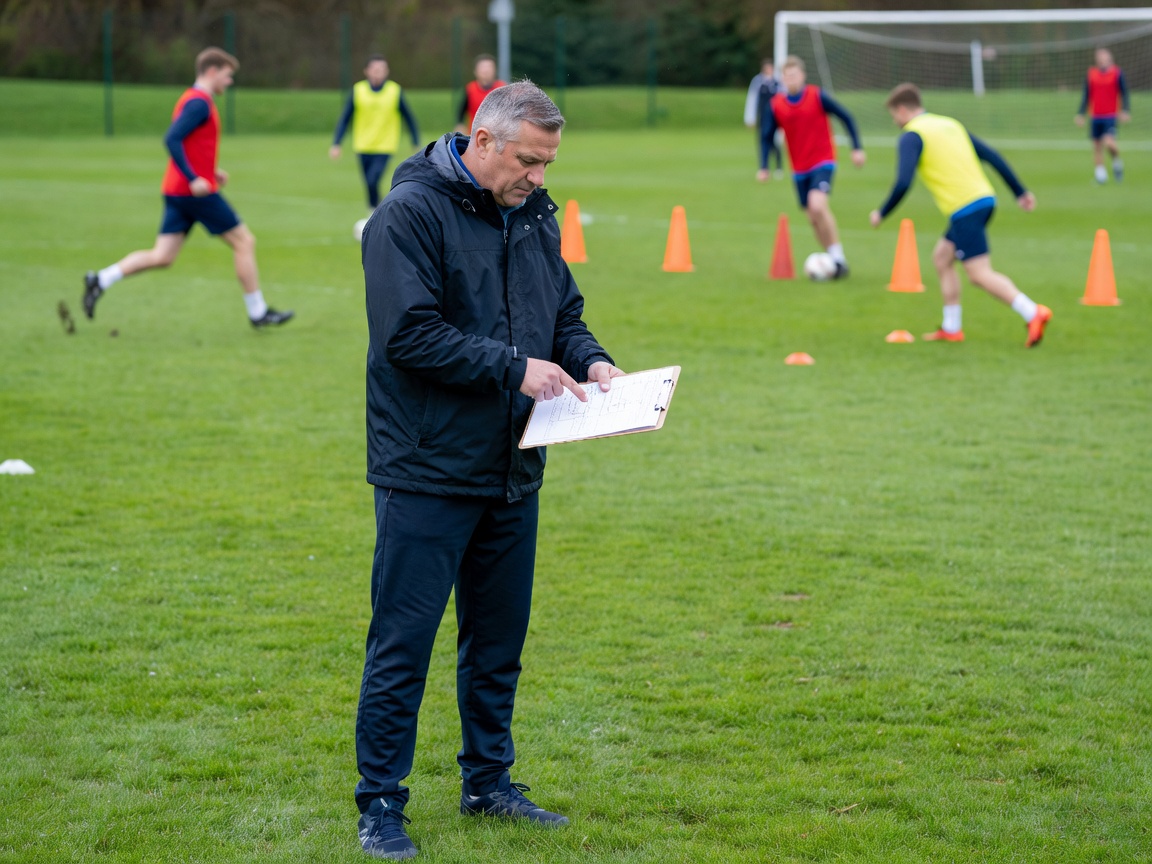
Weekly planning begins with context. How many sessions are available? Is there a match? What has the group recently practised? How are players feeling? A plan should make these questions visible before the cones come out.
Building a session
A warm-up can prepare attention and movement without becoming a disconnected ritual. A technical block may develop receiving, passing or ball control. Tactical exercises then place those actions inside a problem: finding space, defending a channel or progressing after a regain. Small-sided games can bring the pieces together while keeping players involved.
Conditioning may be integrated through game formats or planned separately, depending on age and purpose. Recovery includes hydration, a calm finish and enough time between demanding activities. There is no single formula that suits every group, and specific medical or conditioning decisions should be guided by qualified professionals.
The session plan is a starting map. The players in front of you are the actual terrain.
Match preparation
Preparation might revisit principles rather than adding a pile of new information. Players can rehearse restarts, communication, defensive distances or responses to likely spaces. Keep the message concise. A match is not improved by a coach emptying the entire notebook at once.
Tracking progress
Progress can be tracked through observations: how often players scan, offer support, recover position, communicate or attempt a skill under pressure. Notes should help coaches choose the next challenge, not create fake precision. Share useful observations with players and families in language they can understand.
Adaptation by stage
Younger players generally benefit from play, repetition, varied movement and simple problems. As players mature, sessions can involve more tactical detail, role relationships and self-reflection. Developmental differences within one age group matter, so coaches should adjust space, rules, time and support.
A strong plan leaves room for surprise. Sometimes the best learning arrives when a drill goes slightly off-script.