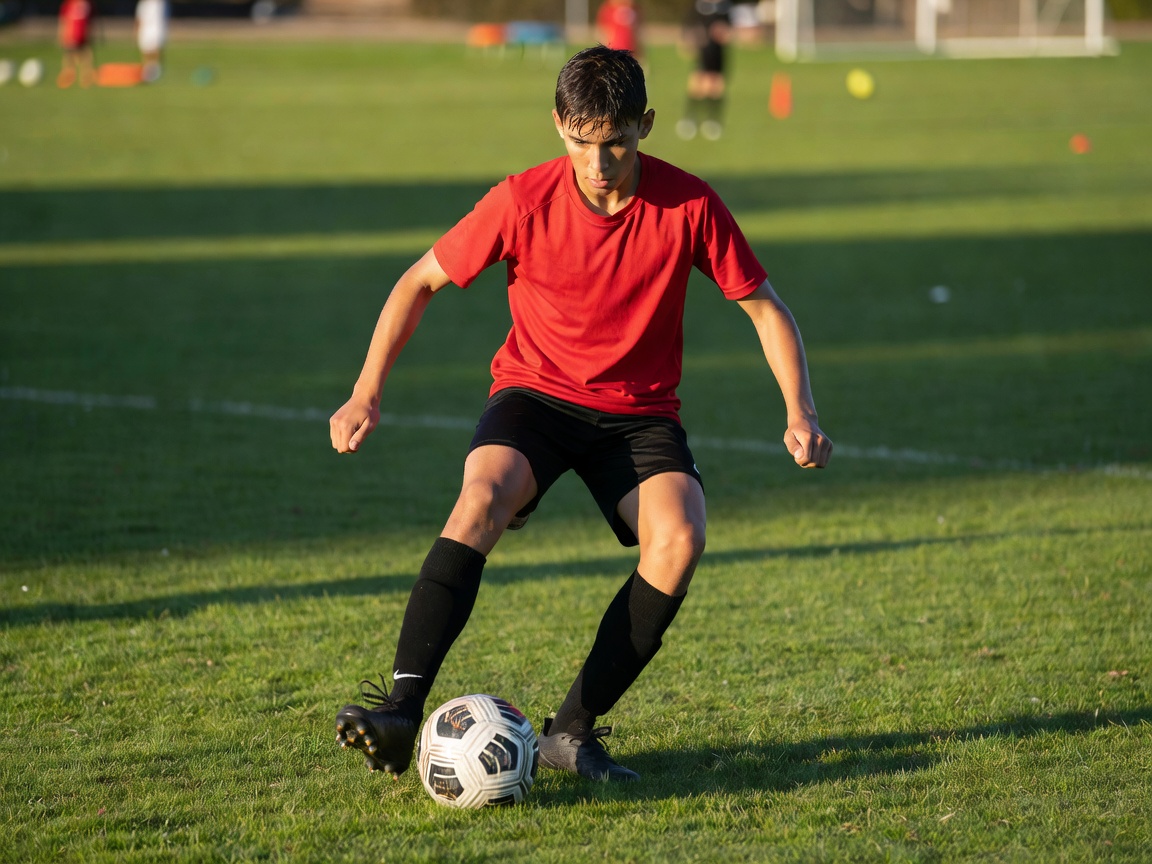
Technical work gives a player tools: first touch, passing, ball carrying, finishing and defending. But tools become useful when players learn when and why to use them. A clean pass under no pressure is different from choosing the right pass while scanning, moving and being challenged.
Technique meets decisions
Receiving practice can include different surfaces, body shapes and directions. Passing can ask players to recognise distance, pressure and support. Finishing can include varied angles and rebounds. Defensive work includes approach speed, body position, patience and the moment to engage. The aim is not a perfect drill performance; it is transferable understanding.
Movement and awareness
Players develop by learning to create space, support a teammate, recover after losing the ball and notice what is changing around them. Position awareness grows through guided questions and small-sided games, not only through fixed lines on a whiteboard.
Physical development
Running, coordination, balance, speed and strength all matter, but the appropriate emphasis changes with age and maturation. Loads should be planned sensibly and adjusted when school, matches, growth or fatigue change the picture. Qualified professionals should guide specific medical or conditioning concerns.
Progress may look like better choices, more resilience or a willingness to receive the ball—not merely a spectacular new trick.
Confidence and long-term progression
Confidence grows when challenge is meaningful and feedback is specific. Players need permission to make mistakes while still learning accountability. A useful review asks what was attempted, what was noticed and what could be tried next.
Different players need different routes. One may need more repetition; another may need more decision-making freedom. A quiet player may communicate through movement before words. Compare the player with their own previous habits, not with an imagined universal schedule.