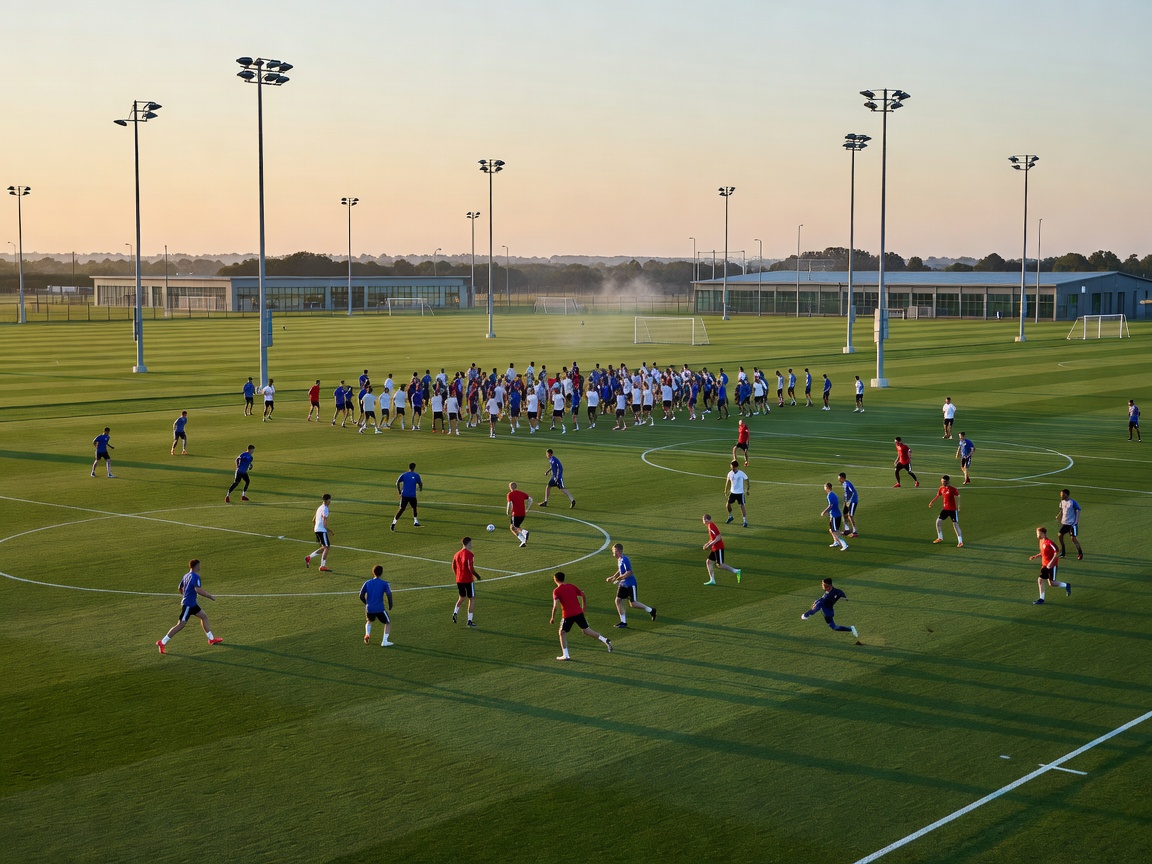
Natural grass can offer a familiar match surface and changing movement demands. Artificial surfaces may provide reliable access across weather and seasons. The important question is whether the surface is maintained, suitable for the activity and used with appropriate footwear and supervision.
Space for different problems
Small-sided pitches help players receive often, make decisions and stay connected to the game. Indoor areas can protect a session from weather and support technical work. Goalkeeping areas may allow repeated handling, footwork and distribution practice. A facility does not need every possible zone; it needs spaces that match its programme.
Support spaces matter
Changing areas, toilets, lighting, storage and accessible routes influence the experience as much as the pitch. Strength and conditioning spaces should be supervised and age-appropriate. Recovery areas can provide somewhere calm to cool down, hydrate or discuss a concern. Good planning includes safeguarding, emergency access and clear responsibility for equipment.
Can the space be adapted without compromising safety, attention or the quality of the football task?
Equipment and safety
Cones, goals, bibs, balls, rebound surfaces and markers are simple tools when they are maintained and stored properly. Check that goals are secure, surfaces are clear, lighting is adequate and weather procedures are understood. Young players should know how to move safely between activities.
Planning a training environment
Start with the programme’s needs: age groups, session size, surface preferences, seasonal access and travel. Then consider noise, visibility, supervision and how groups can enter or leave. A smaller, well-organised space may serve learning better than a large but poorly managed one.
When visiting, notice whether coaches can see the whole activity, whether players wait too long and whether equipment is ready. Architecture is useful when it quietly improves the work. It needn’t pose for a brochure.